
Shaping Student Behavior Through Kindness + Compassion
As educators, we set the tone. Leading with compassion and modeling kindness—through encouraging words, patience, and small gestures—creates a culture where students feel valued and safe. This is where kids behave well and truly thrive. Instead of reacting harshly to misbehavior, try a response like this: "Seems frustrating. How can I help?" This simple shift de-escalates conflicts and builds trust, especially when we get down to their level and start with genuine compassion. When we do this, we’ll show up with a warm, positive tone and non-threatening body language reflexively.

Prioritizing Connection in an Increasingly Disconnected World
Students’ social-emotional well-being is of the utmost importance. Without Maslow, students can’t Bloom. As much as this is touted at professional conferences, in articles, and in social media spaces, we tend to neglect it. We are living in a culture of fast-paced productivity and instant gratification. You can see this with the increase of straight-to-your-door services such as Door Dash, Uber Eats, Amazon, online grocery delivery services, etc. We use these services so that we can get more things done on our to-do lists. If you feel personally attacked by this, just know that I use these as well. They make life easier, right? In the workforce, we see automation and robotics creating more efficiency and higher productivity for companies, which can increase their bottom line. While these innovations are not inherently bad, they pressure us to do more. Fill our time. Sell more. Write more. Produce more. Further, they are decreasing communication and interaction with others. We are slowly losing social connection. It’s interesting to note that the advent of social media has brought digital connectivity across the globe. We can “follow” someone on Instagram who lives in Australia or watch reels of a group of athletes competing at an event in Brazil. Yet, with this increased digital connectivity, we are interacting less with people in real-time in our communities. We are increasing superficial digital connections and decreasing in-person social interaction. I see this in my work as a school counselor every day. Circling back to Maslow’s hierarchy of needs (1954), love and belonging are the third tier. We all need this connection. Our students need this connection - both with adults and with peers.

Beyond Discipline: The Power of Compassion
Traditional discipline models often focus on punishment, but research shows that compassion fosters trust, resilience, and academic success. Schools that prioritize empathy, restorative practices, and belonging create environments where students feel valued and empowered. This approach doesn’t mean lowering expectations—it means ensuring students have the support they need to thrive. Discover how shifting from punitive discipline to compassionate leadership can transform school culture, reduce behavioral issues, and improve student outcomes. Explore practical strategies that build connection, accountability, and a strong foundation for learning.

Why Students Need Collaboration in the Classroom
In today’s classroom, collaboration is more than just a buzzword—it’s a vital skill that today’s students need to thrive. As childhood has shifted from play-based to screen-driven, students miss out on the social and cognitive development that traditional play once provided. This research article explores how incorporating collaborative group work into the classroom helps students develop essential life skills like problem-solving, decision-making, and conflict resolution. Learn how to turn your classroom into a space where teamwork isn’t just encouraged—it’s essential.

From Cruelty to Compassion: How #CTKindness Transformed a School and Sparked a Movement
March 2016. I was a first-year assistant principal, running on fumes and sheer willpower. My days were filled with student crises, teacher support, and endless supervision duties. As if that weren’t enough, I had somehow been talked into coaching the school’s dance team. Exhaustion was my reality, and a rare night off felt like gold.
That night, just as I let myself breathe, a text from a senior student shattered my moment of peace.

More Than Just Teaching
Great teachers possess many attributes, but the best adjectives are timeless and memorable. Depending on what each student needed at the time in their life, some may say demanding, caring, engaging, or fun, but those simply lead to the end result of being unforgettable. In the end, they are the person that you needed at that specific time in your life, the person you could count on when you yearned for attention in some way, perhaps in a form you didn’t know you even needed at that moment. They are a counselor, mentor, fist bump, handshake, side hug, high five, stern talk, shoulder to cry on, safe person to vent to, and a myriad of other needs, which is why it is more than just teaching to kids.
When I look back at the hundreds of students that I have encountered in my career, many stick out, but some play a larger part of my legacy as an educator. There are students like Chris, who tested me daily, or Jamaica who could bring the focus of the class to a halt with a laugh that was infectious, or a student named Elijah who just needed someone to be there and believe in him. But the one that will always stick with me is Karen.

Leading FOR the Heart: The Purposeful Approach to Leadership
Leading with heart wasn’t something I initially struggled with—it was the overwhelming stress of leadership that caused me to lose sight of it. At first, I approached leadership the same way I had always approached teaching: with a heart for making an impact. I loved working with students, teaching and inspiring them, and watching them succeed.
But as the demands of leadership mounted, my focus shifted. The daily pressures—constant meetings, operational challenges, and dealing with difficult situations—took precedence over the relationships I had once prioritized. I felt like I was being pulled in a hundred directions, and the mission of the school became my primary focus. I started to see my role as being the one responsible for moving the mission forward, regardless of the personal connections along the way.
One of the toughest lessons I had to learn was that you can’t accomplish a mission without investing in people. And it wasn’t just about making sure teachers were doing their jobs—it was about truly supporting and developing them, partnering with parents, and building a community that felt connected to the vision of the school.

The Arts Can Promote Youth Mental Well-Being
Have you ever thought of ways to increase your mental well-being? One way is to dive into the arts and learn to express yourself to the point where your creativeness can capture how you feel.
Our youth can use more of the arts in their life. Many think of the arts as painting, playing instruments, or singing, and dancing. The arts are associated with so much more—things like horticulture or cooking can also be seen as the arts. Sadly, many students are not exposed to the various components that make up the arts.
Many schools do offer art, music, cooking, and working with plants. STREAM is the acronym for Science, Technology, Reading, Engineering, Art, and Mathematics, and there are schools focusing on this concept to help students. But we need more programs, so every student has the opportunity to benefit from the arts.
Often, youth (and their families) don’t realize what the arts can do for a person’s mental health. Artistic expression can help decrease depression, feelings of anger, and anxiety according to the American Art Therapy Association. If students are involved in the creative process, then it may help them to regulate the different emotions they feel plus enhance their cognitive skills—all things that students need to be successful in school and in life.

The Science of Belonging: Why Students Thrive When They Feel Valued
Did you know that a strong sense of belonging can boost students' academic performance, improve their social skills, and enhance emotional well-being? Research shows that when students feel valued and connected, they engage more deeply, perform better, and build meaningful relationships. Unfortunately, many young people face loneliness and disconnection, which impacts their ability to thrive.
Discover how fostering belonging can transform schools into inclusive, supportive environments. Learn evidence-based strategies to create spaces where every student feels seen, valued, and empowered.
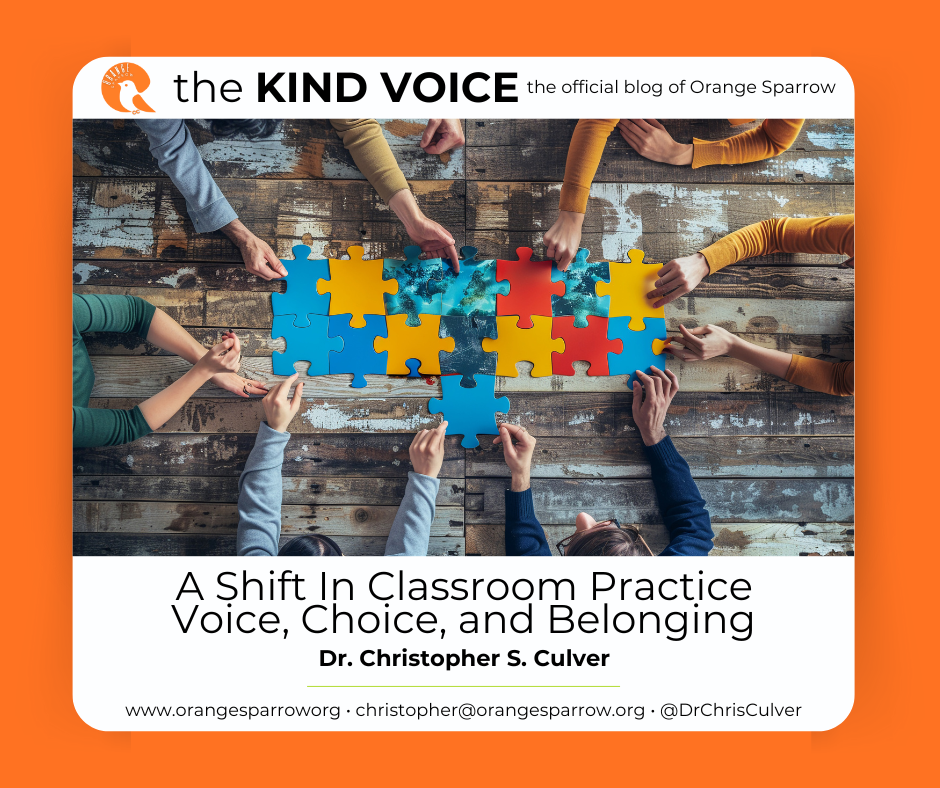
A Shift In CLassroom Practice: Voice, Choice, and Belonging
While I know I fostered relationships and connections with students last year, I also recognize I missed chances for engagement, for deeper connection, and for truly listening. I suspect I’m not alone. I think about educators in PK–12 and collegiate classrooms nationwide, as well as the schools I’ve been privileged to serve—each navigating the needs of today’s learners. Many teachers express nerves about “active learning” because it might put them out of sync with colleagues or reduce time for worksheets. But as we know, a one-size-fits-all approach doesn’t work for today’s students or today’s classroom.
The Power of Kindness in Embracing Neurodiversity in Bilingual Contexts
Maslow reminds us that students' basic needs must be met before they can thrive academically. Safety, belonging, and esteem are precursors to self-actualization. For María, feeling safe and supported would have opened doors to academic growth.
Bloom's Taxonomy emphasizes the progression from remembering to creating. However, for neurodiverse students, higher-order thinking is only accessible when emotional and social needs are addressed. Kindness fosters the trust and connection needed to engage deeply.
Bronfenbrenner's Ecological Systems Theory highlights the interplay between individual, family, school, and society. Acts of kindness within the classroom ripple outward, strengthening the mesosystem of family-school connections and influencing broader societal attitudes toward inclusion.
As Sir Ken Robinson wisely said, 'The key to this transformation is not to standardize education, but to personalize it, to build achievement on discovering the individual talents of each child.' This philosophy aligns perfectly with the principles of kindness in education, reminding us that truly inclusive environments celebrate and nurture the unique potential of every learner.

New Year Reset!
As the new semester begins, it’s time to reset, reflect, and reignite your passion for teaching! This blog explores actionable tips for setting clear expectations, building meaningful relationships with students, and even taking creative “field trips” within your school. Whether you’re an educator or someone seeking a new year refresh in your space, this post is packed with ideas to inspire a successful and joyful start.

From Survival to Leadership
Change doesn’t happen overnight. Whether it’s creating a system for communication or planning classroom visits, small steps lead to big results. For leaders stepping into challenging roles, like stabilizing a struggling school, clarity and systems provide the foundation for success.
One moment that stands out to me is when a previously critical teacher told me she trusted my leadership and believed in the direction I was taking the school. It was a turning point that reminded me how powerful clarity and trust can be in transforming a team.
The Power of Connection in Educational Leadership
In the dynamic world of educational leadership, Superintendent Daniel Ludvigson explores the transformative power of interpersonal connections. Highlighting three pivotal strategies—incidental conversations, noticing shifts in demeanor, and acknowledging efforts—Ludvigson delves into how these approaches not only enhance leadership effectiveness but also foster a nurturing environment that encourages genuine engagement and performance. From setting up tables for open discussions to recognizing subtle emotional shifts among staff, his tactics are designed to make everyone feel valued and heard. This piece is a must-read for anyone aspiring to lead with empathy and insight in any educational setting.

Family Time Needed for Good Mental Health
In today's fast-paced world, where technology often replaces personal interactions, the value of traditional family gatherings seems to be fading. Guest blogger Debra Cox reflects on a time when families would come together, free from the distractions of cell phones and computers, to engage in activities like board games, canning fruits and vegetables, and sharing stories that weave the rich tapestry of family history.
However, while these gatherings were cherished, they also overlooked crucial conversations about mental health, which was often stigmatized or ignored altogether. Today, while we are more open about discussing mental health, families face new kinds of stress, with young people juggling service learning, extracurriculars, and part-time jobs to secure their future.

Tie Dye Tuesday: A Vibrant Celebration of Kindness
At our large, diverse school, fostering a strong sense of connection and belonging among students and staff is always a priority. That's why we launched "Tie Dye Tuesday," a vibrant celebration of unity and kindness that turned our hallways into a sea of color every week.
This initiative was more than just wearing tie-dye shirts; it was a symbol of our commitment to creating a welcoming and inclusive environment. The response from our school community was phenomenal—the energy and joy were palpable as everyone came together in their colorful attire. It wasn't just about the fun of mixing colors; it was a powerful reminder of our shared humanity and the strength of our community spirit.
"Tie Dye Tuesday" sparked conversations, encouraged friendships, and showcased countless acts of kindness, from students helping each other with assignments to staff members going the extra mile to support their charges. The initiative proved that even the simplest ideas could have a profound impact, reinforcing the power we all have to foster kindness and make a positive difference in our surroundings.

Creating a Kind School
In an educational system often critiqued for its rigid structures, the question looms large: why are student voices not more central in shaping their own learning environments? As a high school principal, I've spent over a decade leading a campus that thrives on student input, embracing a philosophy that values kindness, empathy, and student advocacy above traditional authoritarian models.
Schools have been structured in a top-down manner for over a century, directing minute details of a student’s day, from class schedules to lunch menus. However, when constructing a campus that genuinely reflects the values of kindness and empathy, it becomes imperative to involve students in the conversation about their educational journey. After all, they are the very heart of our institutions.

The Crucial Role of Self-Kindness in Leadership and Its Impact on Others
In a world where leadership is often synonymous with self-sacrifice, Amanda Younts challenges the status quo by redefining what it means to lead with kindness and strength. In her thought-provoking blog, she dives into the critical role of self-compassion in education leadership, emphasizing that true success begins with prioritizing personal wellness. Younts explores the eight dimensions of the wellness wheel, the six pillars of a healthy lifestyle, and actionable strategies to create thriving, balanced environments for both staff and students. Discover why being a "well-leader" is not just an option but a necessity—and how leading from a place of self-awareness and grace can transform schools, workplaces, and lives.
Read the full blog to uncover how you can lead with balance, inspire others, and make wellness a lasting part of your leadership journey.
Lessons Beyond Language: Celebrating Unity and Resilience
In this compelling contribution by guest writer Andrea Bitner, you are introduced to the poignant yet inspiring story of Nancy—a young life tragically interrupted by a train accident. Andrea Bitner, an educator working with English Language Learners, provides insights into the profound impact of Nancy’s loss on a diverse community.
The narrative delves into the resilience and unity that blossomed in the aftermath of tragedy. Bitner describes the challenges faced in assisting Nancy's grieving family, who spoke little English, and highlights how the community came together to offer support. This support bridged cultural divides, showcasing the incredible capacity for empathy and collective healing.
Andrea Bitner’s reflections illuminate the essential truth that human connections, understanding, and support extend beyond language barriers. The blog post calls on educators and community members to nurture the diverse garden of our society with compassion, resilience, and an open heart. Read more!

The Power of Kindness: Supporting New Teachers in Their First Years
As we step into the bustling and often overwhelming world of teaching, it's essential to remember the transformative power of kindness. For new teachers embarking on their career journey, the initial excitement soon meets the challenging realities of classroom management, diverse student needs, and intricate school dynamics. These early years are not just about survival; they are foundational to a teacher’s long-term success and job satisfaction.
Dr. Jenn Shaver highlights the crucial role of a supportive school culture, as research consistently shows it as a key predictor of teacher retention. Kindness within the school community—from simple acts like checking in after a tough day to providing constructive feedback—helps new teachers feel valued and integrated into a team. This culture of trust and psychological safety encourages new educators to take risks, seek guidance, and engage fully in their professional development.
The ripple effects of fostering such an environment extend beyond individual teachers to enhance the entire school community, contributing to a robust, resilient education system. Let's harness the holiday season's spirit to support our new teachers with acts of kindness that affirm their crucial role in education. Read more about how we can uplift our educators in Dr. Shaver’s insightful blog.